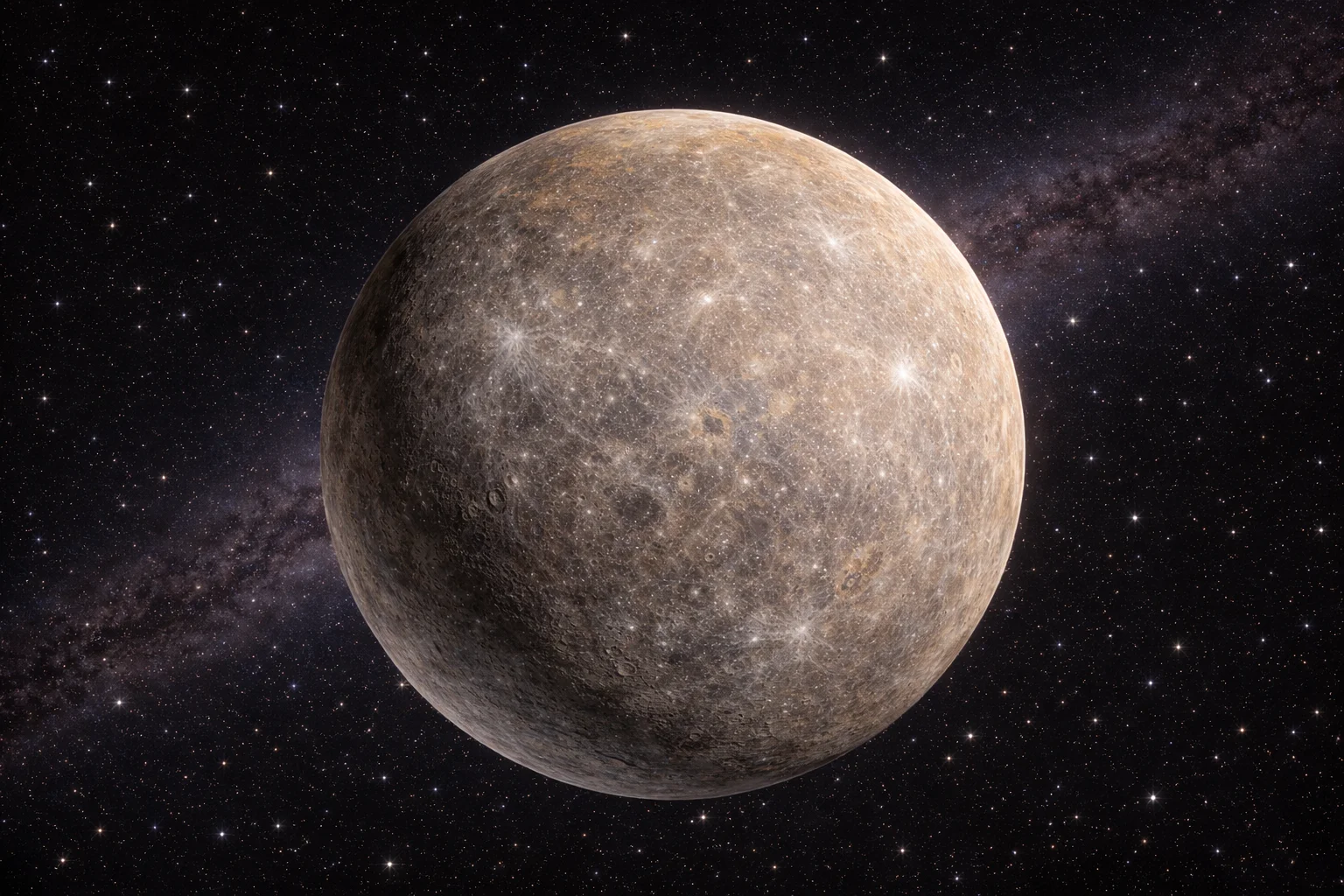
Social Planets
♃
Jupiter
Jupiter in astrology represents growth, expansion, wisdom, and good fortune. Learn what Jupiter means in your birth chart, transits, and relationships.
Last updated:
Live Celestial Data
Jupiter
Direct
0.19°/dayFast
Jupiter
Peregrine
Wandering-5Strength+5
+0
What is the Jupiter?
12 min read
Where you grow and find meaning — your natural path to expansion, opportunity, and the quest for truth.
Jupiter is the largest planet in our solar system, and in astrology its influence is equally vast. Known as the Great Benefic, Jupiter brings expansion, opportunity, and good fortune to whatever it touches. But Jupiter is not simply about luck in the lottery sense. It represents the principle of growth itself — the drive to reach beyond current limitations, to understand more, to become more, to live more fully. Where the Sun asks who am I, Jupiter asks what else is possible. Where Saturn sets boundaries, Jupiter dissolves them. Jupiter is the yes that opens doors, the faith that sustains effort, the meaning that makes struggle worthwhile.
Every culture recognizes the Jupiter principle, though they name it differently. It is the force that makes seeds grow into trees, that drives animals to explore beyond familiar territory, that compels humans to ask questions about God, meaning, and the nature of reality. In psychological terms, Jupiter represents the growth instinct — not mere survival like the Moon, not ego assertion like the Sun, but the urge to expand consciousness and capability beyond what currently exists. This is why Jupiter rules higher education, philosophy, religion, and long-distance travel. All these activities share one thing: they take you beyond your starting point and return you changed.
The Archetype of the Teacher-King
In Roman mythology, Jupiter was the king of gods — Zeus to the Greeks — ruler of the heavens, wielder of thunderbolts, and upholder of cosmic law. But Jupiter was not merely a tyrant on a throne. He was also the protector of oaths, the guardian of hospitality, and the source of divine wisdom. Kings in the ancient world derived their authority from Jupiter; to rule justly was to channel his beneficence. This mythological background illuminates the astrological Jupiter: it is the principle of benevolent expansion, of growth that follows natural law rather than violating it, of abundance that comes through right relationship with truth.
The teacher archetype is equally central to Jupiter. In Vedic astrology, Jupiter is called Guru — literally teacher — and is considered the most benefic of all planets. The teacher expands the student's mind, opens doors to knowledge previously inaccessible, and models what is possible. A good Jupiter placement often indicates the presence of helpful teachers and mentors throughout life, or the capacity to serve as such for others. Jupiter is the part of you that knows there is always more to learn, that refuses intellectual complacency, that finds joy in sharing knowledge rather than hoarding it.
The Psychological Principle
Jupiter represents the growth drive in the psyche — the impulse to become more than you currently are. This is different from the Moon's security needs or the Sun's identity expression. Jupiter is future-oriented: it sees potential, possibility, what could be rather than what is. This is both its gift and its shadow. The gift is optimism, faith, the ability to sustain effort toward distant goals. The shadow is over-promising, over-extending, believing more is always better regardless of context.
Psychologically healthy Jupiter manifests as genuine wisdom — the integration of knowledge with experience, the ability to see patterns and extract meaning, the capacity to hold multiple perspectives without losing your own center. It is the part of you that can say this difficulty has meaning, this suffering teaches something, this limitation serves a purpose. Without Jupiter, life becomes mere survival — comfortable perhaps, but lacking the dimension of significance that makes human existence distinctly human.
Jupiter also governs faith — not necessarily religious faith, though that is included, but the basic trust that life is meaningful, that effort produces results, that the future can be better than the past. People with strong Jupiters tend to be naturally optimistic, not through denial of difficulty but through genuine confidence that they can handle what comes. People with challenged Jupiters may struggle with cynicism, meaninglessness, or the inability to commit to long-term goals because they do not trust that the future will reward present sacrifice.
Domains of Jupiter Influence
Jupiter governs several interconnected life domains. First and most fundamentally, Jupiter rules meaning and purpose. Not the daily sense of identity (Sun) or emotional security (Moon), but the larger question of what life is about and where you fit in the cosmic order. Jupiter issues often emerge in midlife when material success proves hollow without significance. The forty-year-old who has achieved everything society promised would make them happy but feels empty is experiencing a Jupiter crisis.
Second, Jupiter rules expansion in all its forms. Material abundance is part of this — Jupiter transits often coincide with raises, windfalls, and increased resources — but so is expansion of mind, territory, and social circle. Jupiter wants more: more experience, more understanding, more connection. The challenge is that more is not always better. Jupiter's shadow is excess, the inability to know when enough is enough. The person who keeps eating after they are full, keeps spending after they are broke, keeps talking after the point is made — this is Jupiter unrestrained.
Third, Jupiter rules higher learning and philosophy. Universities, graduate programs, professional training, religious education — anything that systematically expands the mind beyond its starting point falls under Jupiter. Travel to foreign countries is Jupiterian because it forces encounter with different worldviews and expands understanding of human possibility. Publishing is Jupiterian because it spreads ideas beyond their origin. Teaching is Jupiterian because it multiplies understanding.
Fourth, Jupiter governs law and ethics — not the restrictive law of Saturn that punishes transgression, but the aspirational law that describes how things should be. Justice in the cosmic sense, moral truth, the principles that should guide human conduct — these are Jupiter's domain. Lawyers, judges, ethicists, and religious leaders often have strong Jupiter placements.
Jupiter Through the Signs
Your Jupiter sign describes your personal philosophy of growth — how you seek expansion, what you believe in, where you naturally find opportunity. Fire sign Jupiters grow through action, courage, and inspiration. Jupiter in Aries believes in the power of initiative and finds luck through bold beginnings. Jupiter in Leo believes in the power of creative self-expression and finds luck through generosity and heart. Jupiter in Sagittarius is at home, believing in truth, adventure, and the journey itself.
Earth sign Jupiters grow through practical effort and material development. Jupiter in Taurus believes in the power of steady accumulation and finds luck through patience and sensory appreciation. Jupiter in Virgo believes in the power of competence and service, finding luck through skillful work and useful contribution. Jupiter in Capricorn is in its fall, challenged to find expansive meaning within structural constraints.
Air sign Jupiters grow through ideas, communication, and social connection. Jupiter in Gemini is in detriment, scattered across too many interests but gifted at synthesizing diverse information. Jupiter in Libra believes in the power of relationship and balance, finding luck through partnership and aesthetic appreciation. Jupiter in Aquarius believes in the power of innovation and collective progress.
Water sign Jupiters grow through emotional depth and intuitive understanding. Jupiter in Cancer is exalted, combining expansion with nurturing to create abundance through care. Jupiter in Scorpio believes in the power of transformation and finds luck through willingness to go deep into shadow material. Jupiter in Pisces is at home, believing in the power of compassion, imagination, and connection to the infinite.
The Jupiter Cycle
Jupiter takes approximately twelve years to complete its orbit, spending roughly one year in each sign. This creates a natural twelve-year cycle of expansion that structures much of adult life. The Jupiter Return at ages twelve, twenty-four, thirty-six, forty-eight, sixty, and seventy-two marks chapters in the growth narrative. Each return invites you to expand in whatever way is appropriate to that life stage — the twelve-year-old expanding into adolescent identity, the twenty-four-year-old into adult competence, the thirty-six-year-old into mature contribution, and so on.
Between returns, Jupiter's transits through your chart houses highlight different areas ripe for growth. Jupiter transiting your first house amplifies confidence and personal opportunity. Jupiter in your seventh house expands through partnership. Jupiter in your tenth house brings career advancement and public recognition. The house Jupiter currently transits is where doors are opening, where faith is rewarded, where growth happens most naturally.
Jupiter stations retrograde for about four months each year. Unlike Mercury retrograde, Jupiter retrograde rarely causes external disruption. Instead, it marks a period of internal expansion — digesting experiences, integrating learning, reconsidering beliefs. Growth continues during Jupiter retrograde, but it happens within rather than without. Projects started under direct Jupiter tend to expand outward; those started during retrograde may develop more slowly but often have deeper roots.
Jupiter and Other Planets
Jupiter's relationship to other planets reveals important dynamics. Jupiter and Saturn are the great social planets, governing opposite but complementary functions. Jupiter expands; Saturn contracts. Jupiter says yes; Saturn says not yet or not like that. Jupiter is faith; Saturn is doubt. Jupiter without Saturn is reckless inflation; Saturn without Jupiter is paralyzed caution. The Jupiter-Saturn cycle, roughly twenty years from conjunction to conjunction, structures collective economic and social development. Personal charts with Jupiter-Saturn aspects must navigate the tension between expansion and restriction.
Jupiter and Neptune share rulership of Pisces and both relate to faith and transcendence. But Jupiter's faith is more philosophical, based on understanding; Neptune's is more mystical, based on dissolution of boundaries. Jupiter-Neptune aspects often indicate strong spiritual interests but can also manifest as unrealistic expectations or idealistic inflation.
Jupiter and Pluto together create enormous power for good or ill. Jupiter expands whatever it touches; Pluto intensifies it. Jupiter-Pluto aspects often appear in charts of people with significant impact — leaders, wealth-builders, transformative figures — but the power can be used constructively or destructively.
Working with Jupiter
Working with Jupiter means cultivating the growth instinct consciously rather than letting it run unconsciously. First, identify where Jupiter sits in your chart — sign, house, and aspects — to understand your natural growth style. Do you expand through ideas or action? Through solitude or connection? Through tradition or innovation? There is no single right way to grow; there is your way.
Second, distinguish between healthy growth and mere inflation. Real growth produces lasting change — wisdom that remains, skills that endure, understanding that deepens. Inflation produces temporary expansion followed by collapse. The boom and bust cycle, whether in finances, relationships, or projects, is Jupiter misused. Ask: is this growth sustainable? Does it serve something beyond ego gratification? Does it respect natural limits while expanding artificial ones?
Third, cultivate meaning actively. Jupiter cannot make life meaningful for you, but it can help you find meaning in whatever life brings. The practice of asking what can I learn from this, how does this fit into a larger pattern, what is this experience teaching me — these are Jupiter practices that transform difficulty into wisdom.
The Shadow of Jupiter
Jupiter's shadow is harder to recognize than Saturn's because excess feels good in the moment. The Saturn shadow is obviously unpleasant — fear, limitation, depression. The Jupiter shadow is pleasant — overconfidence, overindulgence, grandiosity — until consequences arrive. The gambler on a winning streak, the entrepreneur expanding too fast, the preacher certain of his righteousness — all are in Jupiter's shadow.
The deepest Jupiter shadow is meaninglessness disguised as meaning. This happens when philosophy becomes dogma, when belief hardens into ideology, when the teacher stops learning. Jupiter wants truth, but found truth can become a prison just as rigid as Saturn's limitations. The cure is intellectual humility — the recognition that however much you know, there is always more to learn; however right you are, you might be wrong.
Jupiter in the Body
In medical astrology, Jupiter governs the liver, the organ that processes and distributes nutrients throughout the body — an apt metaphor for Jupiter's function of processing experience and distributing wisdom. Jupiter also rules fat and sugar metabolism, body growth in general, and the hips and thighs. Jupiterian health issues often involve excess — overeating, overdrinking, overextending. The liver suffers when Jupiter is abused. Conversely, healthy Jupiter expression supports robust constitution, quick recovery, and physical optimism.
People with strong Jupiter often have naturally large frames or tendency toward weight gain. This is not destiny but inclination — the body reflecting the psyche's desire for more. Jupiter types may need to consciously practice moderation, which does not come naturally. But when healthy, Jupiter gives resilience, recovery capacity, and a constitution that can handle significant demands.
Planetary Dignity
Jupiter rules Sagittarius, where it expresses through adventure, philosophy, direct truth-seeking, and the expansion of horizons through experience — Sagittarius Jupiter people are natural teachers and seekers who grow by going far, literally or intellectually. Jupiter traditionally also rules Pisces, where it expresses through compassion, imagination, spiritual seeking, and dissolution of boundaries — Pisces Jupiter finds growth through surrender, service, and connection to the infinite. Jupiter is exalted in Cancer, where expansion combines with nurturing — here abundance flows through emotional generosity, family, and creating safe spaces where others can grow. Exalted Jupiter understands that true growth serves the collective, not just the self. Jupiter is in detriment in Gemini and Virgo, the signs of its opposite ruler Mercury, where the expansive vision gets scattered across too many details or interests — these placements require consciously synthesizing information rather than just collecting it. Jupiter is in fall in Capricorn, where the optimistic growth principle meets structural limitation — Capricorn Jupiter must find meaning within constraints and often achieves significant expansion, but slowly and through sustained effort rather than lucky breaks.
Topics: expansion, opportunity, wisdom, growth, optimism, philosophy, abundance, faith
✦ Constructive Expression
Generous, optimistic, wise, visionary, inspiring, adventurous, open-minded, faithful, philosophical
✧ Shadow Expression
Overconfident, excessive, preachy, reckless, wasteful, dogmatic, inflated, moralistic
Interpretation Contexts
In the Birth Chart
In a birth chart, Jupiter shows where and how you naturally grow, find meaning, and attract opportunity. The Jupiter sign reveals your philosophy of life — how you approach questions of truth, what you believe in, and what makes you optimistic. Jupiter in Sagittarius seeks growth through adventure and direct experience of truth; Jupiter in Virgo seeks it through competence, skill development, and useful service. The house placement shows the life arena where expansion happens most naturally: Jupiter in the 9th house grows through education, travel, and philosophical exploration; Jupiter in the 2nd house attracts resources and finds meaning through values and material development; Jupiter in the 7th house expands through partnership and one-on-one relationships. Aspects to Jupiter modify its expression — Jupiter conjunct the Sun amplifies identity and confidence but risks arrogance; Jupiter square Saturn creates tension between expansion and restriction, often producing late-blooming success after early frustration; Jupiter trine the Moon indicates emotional generosity and instinctive optimism. A strong Jupiter suggests someone who naturally sees possibility, attracts helpful mentors, and maintains faith through difficulty.
During Transits
Jupiter transits mark periods of growth, opportunity, and expanded possibility in whatever area of life the transit activates. With a twelve-year orbit, Jupiter spends about one year in each sign and house, creating annual themes of expansion. Jupiter transiting your first house brings a year of increased confidence, visibility, and personal opportunity — an excellent time to launch new ventures. Jupiter in your tenth house indicates career expansion and public recognition. Jupiter transiting your fourth house may bring a move to a larger home or growth in family life. The Jupiter Return, occurring every twelve years around ages 12, 24, 36, 48, 60, and 72, marks significant life chapters where new growth cycles begin. Transiting Jupiter conjunct natal planets amplifies those planetary functions — Jupiter conjunct natal Venus brings romantic opportunity and social expansion; Jupiter conjunct natal Mars increases drive, ambition, and successful action. Unlike slower outer planet transits that restructure life fundamentally, Jupiter transits tend to bring welcome opportunities that require you to say yes and show up rather than survive difficulty.
In Relationships
In relationship astrology, Jupiter contacts indicate where one person expands, inspires, and brings opportunity to another. When your Jupiter aspects someone's personal planets, you naturally encourage their growth and bring optimism to their life — you are a benefactor for them, though you may not realize how much you give. Jupiter conjunct someone's Sun makes them feel larger in your presence; their identity expands through knowing you. Jupiter conjunct someone's Moon provides emotional encouragement and a sense of abundance and safety. Jupiter-Venus contacts bring generosity, shared pleasure, and mutual appreciation — excellent for both romantic and business partnerships. Jupiter-Mars contacts generate enthusiasm for shared action and adventure. Challenging Jupiter aspects, like Jupiter square Saturn between charts, can create tension between one person's desire to expand and another's need for caution — the Jupiter person may feel the other is limiting, while the Saturn person may feel the other is reckless. The house where someone's Jupiter falls in your chart shows where they bring opportunity and growth to your life; your Jupiter in their chart shows where you expand their horizons.





✧The answers you seek✧
Frequently Asked Questions
Jupiter enters Virgo on July 26, 2027.
Jupiter goes retrograde on December 12, 2026 in Leo.
Jupiter goes direct on April 12, 2027.
Your Jupiter Return occurs every 12 years when Jupiter completes its orbit and returns to the exact position it held at your birth. Key returns happen around ages 12, 24, 36, 48, 60, and 72. Each marks a new chapter of growth and opportunity — a cosmic green light to expand your life. The year of a Jupiter Return often brings lucky breaks, new horizons, and a renewed sense of purpose.
Jupiter is called the 'Great Benefic' because it tends to bring opportunity and expansion wherever it lands. But Jupiter isn't magic luck — it amplifies what's already there. A well-placed Jupiter opens doors; a challenged Jupiter can bring excess, overconfidence, or promises that don't materialize. Think of Jupiter as 'more' — more opportunity, but also potentially more of whatever pattern exists.
Jupiter goes retrograde for about 4 months each year. Unlike Mercury retrograde, it rarely causes disruption. Jupiter retrograde is a time for inner growth rather than outer expansion — reflecting on your beliefs, digesting past experiences, and reconsidering what 'success' means to you. Opportunities may slow down, but wisdom deepens.
Jupiter traditionally 'joys' in the 11th house of community and future visions. It's also powerful in the 9th house (which it naturally rules), the 1st house (amplifying personality and luck), and the 10th house (career expansion). However, Jupiter brings growth potential to any house — its placement simply shows where life tends to expand most naturally.
Your Jupiter sign reveals your personal philosophy of life — how you seek meaning, what makes you feel optimistic, and where you naturally attract good fortune. Jupiter in fire signs (Aries, Leo, Sagittarius) finds luck through action and confidence. In earth signs, through practical effort. In air signs, through ideas and connections. In water signs, through intuition and emotional wisdom.
Before Neptune's discovery in 1846, Jupiter ruled both signs. Sagittarius expresses Jupiter's philosophical, adventurous, truth-seeking side. Pisces expresses its spiritual, compassionate, boundless side. Modern astrologers typically assign Neptune to Pisces, but many still honor Jupiter as Pisces' traditional ruler — particularly in traditional astrology systems.
Jupiter spends approximately 12-13 months in each zodiac sign, completing its full orbit in about 12 years. This means everyone born within the same year shares a Jupiter sign. When Jupiter transits your Sun sign or rises in your chart, it's often a fortunate period — a year when doors open and growth accelerates.
Jupiter and Saturn are opposite forces in astrology. Jupiter expands, Saturn contracts. Jupiter says 'yes,' Saturn says 'not yet.' Jupiter brings opportunity, Saturn brings responsibility. Jupiter is faith, Saturn is doubt. A healthy life needs both: Jupiter's optimism without Saturn becomes reckless; Saturn's caution without Jupiter becomes paralysis.
A planet is 'exalted' in the sign where it expresses its best qualities. Jupiter in Cancer combines expansion with nurturing — generosity flows through emotional connection, family, and creating safe spaces for growth. Cancer gives Jupiter heart, channeling abundance toward caring for others rather than abstract philosophizing.
Yes. Jupiter's shadow includes overconfidence, excess, wastefulness, and preachiness. A challenged Jupiter (hard aspects to Saturn, Neptune, or Pluto) might manifest as broken promises, blind optimism, or growth that lacks grounding. In the 12th house, Jupiter's blessings may feel hidden. Jupiter in detriment (Gemini, Virgo) or fall (Capricorn) requires more conscious effort to access its gifts.
When Jupiter transits your Sun sign — which happens once every 12 years for about a year — it's traditionally one of your luckiest periods. Opportunities increase, confidence rises, and life tends to feel more expansive. It's an excellent time for new ventures, travel, education, or anything that broadens your horizons. The effect is strongest when Jupiter crosses your exact Sun degree.
A Jupiter conjunction means Jupiter sits very close to another planet in your birth chart, blending their energies. Jupiter conjunct Venus amplifies love and pleasure. Jupiter conjunct Mars boosts drive and ambition. Jupiter conjunct Saturn creates tension between expansion and restriction. The conjunction planet gets 'Jupiterized' — made larger, more optimistic, and more visible.
Jupiter goes retrograde for about 4 months every year, then stations direct. The exact date shifts annually — check current ephemeris tables. You'll usually notice Jupiter going direct because plans that were stuck for months suddenly start moving again, like someone released the parking brake.
Upcoming Jupiter Events 2026–2027
| Dec 12, 2026in 85 days | ℞ | Goes Retrograde in ♌ Leo |
| Apr 12, 2027in 206 days | ↻ | Goes Direct in ♌ Leo |
| Jul 26, 2027in 311 days | → | Enters ♍ Virgo |
℞
Dec 12, 2026
Goes Retrograde in ♌ Leo
in 85 days↻
Apr 12, 2027
Goes Direct in ♌ Leo
in 206 days→
Jul 26, 2027
Enters ♍ Virgo
in 311 daysPersonalized readings based on your birth data
Explore Your Chart
Free
Daily Horoscope
Every morning, we check where the planets are and tell you what it means. Not vague stuff — things you might actually notice today.
Get Started
No signup. No tracking. Just pick your sign and read.
Free
Yearly Horoscope
Not vague promises about 'growth opportunities.' Real themes. Real timing. What this year is actually about for you — and when it gets interesting.
Get Started
Free. No signup. Based on where the planets actually are.
€1
AstroCards
Your birth chart, distilled into one shareable image. Dating roasts, personality callouts, compatibility scores. €1 each. Built for group chats.
Get Started
€1 each. No subscription. 1% to climate.
Birth Chart Reading
Your cosmic blueprint revealed. See why you are the way you are — your patterns, strengths, and the themes that keep showing up in your life.
Coming Soon