Neptune
Retrograde
Neptune in astrology represents dreams, spirituality, imagination, and transcendence. Learn what Neptune means in your birth chart, transits, and relationships.
Last updated:
Where you transcend ordinary reality — your imagination, ideals, creative vision, and spiritual longing.
Neptune is the planet of dreams, imagination, and the dissolution of boundaries. Named after the Roman god of the sea, it represents everything that lies beneath the surface of ordinary reality: the unconscious, intuition, artistic inspiration, spirituality, and the longing to merge with something greater than yourself. While the Sun builds ego and Saturn builds structure, Neptune dissolves both. It is the yearning for unity, for transcendence, for the experience of something infinite and ineffable. Neptune whispers that ordinary reality is not all there is, that beneath the surface of appearances lies a deeper truth accessible only through surrender, imagination, and faith.
Understanding Neptune requires accepting paradox. It is simultaneously the planet of highest spiritual attainment and lowest escapist destruction. The same energy that produces mystics produces addicts. The same dissolution that enables compassion enables delusion. Neptune does not discriminate between healthy and unhealthy transcendence — it simply dissolves whatever boundaries it touches. This is why Neptune is perhaps the most misunderstood planet in astrology: its gifts and dangers are inseparable. The mystic and the addict are seeking the same thing, just through different doors. Working with Neptune consciously means finding doors that open to genuine transcendence rather than ones that lead to destruction.
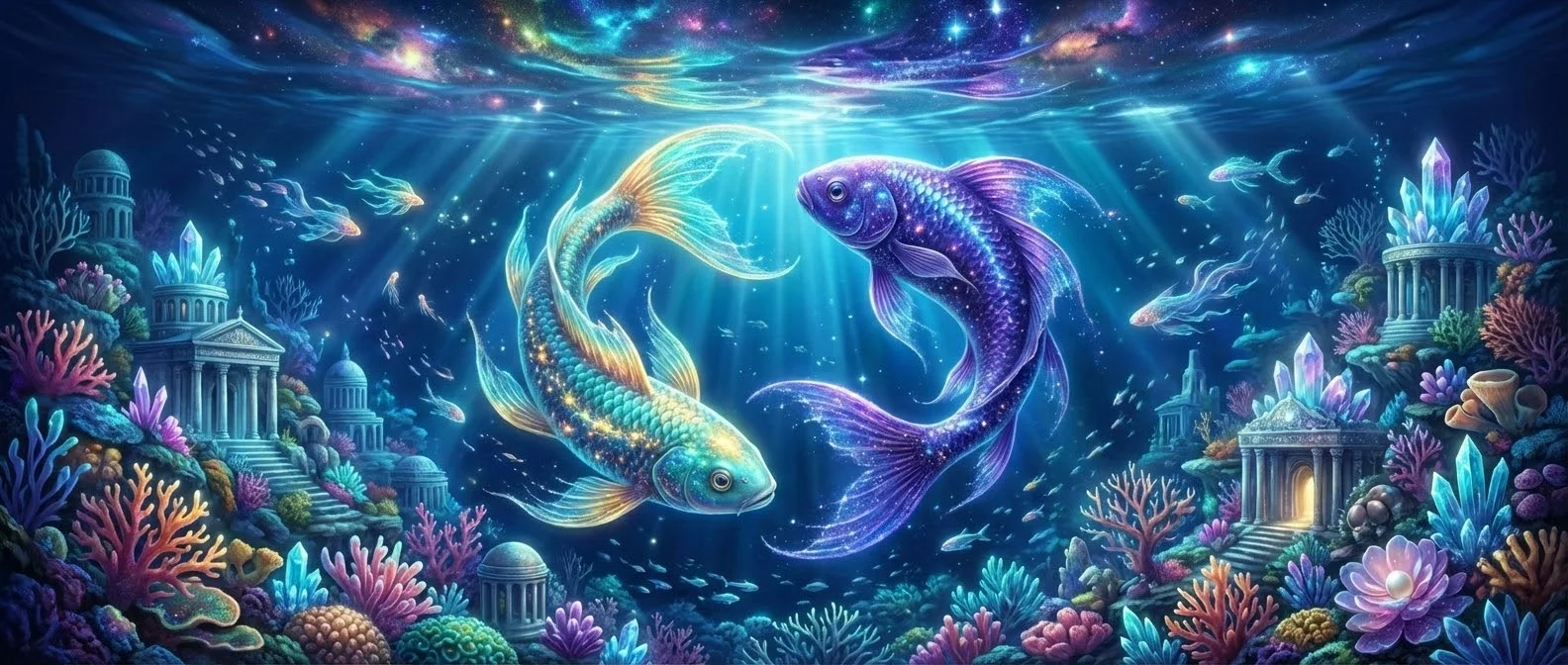
Neptune takes its name from the Roman god of the sea, and oceanic symbolism pervades everything about this planet. The ocean represents the unconscious mind — vast, deep, teeming with life both beautiful and terrifying, and fundamentally unmappable. You cannot build structures in the ocean; you can only surrender to its currents or drown fighting them. This is Neptune's essential teaching: some aspects of existence cannot be controlled, only navigated through surrender and trust. The ocean also represents undifferentiated unity. Before birth, we float in amniotic fluid — a personal ocean where boundaries between self and mother do not yet exist. Neptune governs the longing to return to that state of oceanic oneness, whether through meditation, music, love, drugs, or death. Every Neptune experience is fundamentally an experience of boundary dissolution.
The Greek equivalent of Neptune is Poseidon, whose domain extended not just to the sea but to earthquakes — the shaking of foundations. This connects to another Neptune theme: the dissolution of what seemed solid and certain. Neptune transits often feel like the ground becoming unstable, like structures you depended on dissolving into mist. This is terrifying when you are attached to those structures but liberating when you are ready to transcend them. Poseidon was also associated with horses, symbols of instinct, power, and the wildness that cannot be fully tamed by human reason. Neptune connects us to instinctual knowing that bypasses rational mind — intuition, psychic perception, artistic inspiration that arrives from elsewhere.
Psychologically, Neptune represents the longing for transcendence — the sense that ordinary ego-consciousness is not enough, that there must be something more. This longing is universal. Every human being has experienced moments when the boundaries of self seemed to dissolve: falling in love, being transported by music, watching a sunset so beautiful that the separation between observer and observed disappeared. These experiences hint at a mode of consciousness beyond ordinary ego — and Neptune is the planetary archetype that governs both the longing for that consciousness and its actual attainment.
The danger lies in how we pursue transcendence. Neptune does not care whether you dissolve ego through meditation or heroin, through genuine spiritual practice or through delusional fantasy. Both feel like relief from the burden of separate selfhood. The Jungian concept of ego dissolution is relevant here: the ego must eventually surrender to something greater than itself, but premature or involuntary ego dissolution leads to psychosis, addiction, or victimhood rather than enlightenment. Neptune's challenge is timing and method — learning to dissolve boundaries consciously and appropriately rather than losing yourself entirely.
Neptune also governs projection and idealization. When we cannot see something clearly — when boundaries are blurred — we project our own unconscious material onto it. This is why Neptune is associated with both romantic love and cruel disappointment. When Neptune touches relationships, we often do not see the other person at all; we see our projection of the ideal. When the projection dissolves and we see the actual person, Neptune's disillusionment sets in. This is not Neptune's cruelty but its gift: reality is ultimately kinder than illusion, even when the initial disappointment hurts.
Neptune governs all forms of transcendence and boundary dissolution. First and most obviously, Neptune rules spirituality, mysticism, and direct experience of the divine. People with strong Neptune often have genuine mystical experiences — moments when the veil between ordinary reality and something infinite becomes thin or disappears entirely. Whether these experiences occur through meditation, prayer, nature, psychedelics, or spontaneously, they share the Neptunian quality of ego dissolution and oceanic unity. Neptune does not govern organized religion as much as it governs direct spiritual experience.
Second, Neptune rules the arts, particularly those that create transcendent experiences. Music is perhaps the most Neptunian art form — invisible, temporal, capable of transporting listeners into altered states without any rational content whatsoever. Film, photography, and dance also carry strong Neptune signatures. Poetry, particularly the kind that evokes rather than describes, belongs to Neptune. What these arts share is the capacity to dissolve the boundary between audience and artwork, to create experiences that bypass rational mind and touch something deeper. Neptunian artists often describe their creative process as channeling rather than constructing — they receive something from beyond themselves rather than manufacturing it from within.
Third, Neptune governs compassion and unconditional love — the dissolution of the boundary between self and other that allows genuine empathy. When Neptune functions well, it produces people who can feel others' suffering as their own, who serve without calculating personal benefit, who love without conditions. The great humanitarians, nurses, hospice workers, and healers often have strong Neptune. But this same boundary dissolution can become pathological: the inability to distinguish your pain from others' pain, the merging with others that costs you your identity, the compassion that enables dysfunction rather than genuinely helping.
Fourth, Neptune rules the unconscious mind and everything hidden beneath the surface of awareness. Dreams, fantasies, the imagery that arises in meditation, psychic impressions, hunches that prove accurate — all these belong to Neptune. So do unconscious motivations, repressed material, and the parts of psyche that influence behavior without conscious awareness. Neptune transits often bring unconscious material to the surface, sometimes gently through dreams and intuitions, sometimes dramatically through events that force recognition of what was hidden.
Neptune's shadow is substantial and cannot be minimized. First, Neptune governs addiction — any compulsive pursuit of transcendence through destructive means. Alcoholism, drug addiction, gambling, sex addiction, eating disorders, fantasy addiction, workaholism that serves as escape — all these have Neptune signatures. The common thread is the desperate need to dissolve ego, to escape ordinary consciousness, pursued through channels that ultimately destroy rather than liberate. Neptune does not cause addiction, but it creates the longing that addiction promises to fulfill. Healing addiction always requires finding healthy outlets for Neptunian transcendence.
Second, Neptune governs delusion and the refusal to see reality. Where Neptune sits in your chart is where you are most likely to deceive yourself, to see what you want to see rather than what is there. Neptune can idealize people, situations, and substances to the point of complete disconnection from reality. The person who stays in an abusive relationship because they are in love with the ideal rather than seeing the actual person. The artist who cannot hear legitimate criticism because their self-image depends on being special. The spiritual seeker who believes they have attained enlightenment while exhibiting obvious ego. These are all Neptune distortions.
Third, Neptune governs victimhood and martyrdom — the dissolution of appropriate boundaries that leads to being taken advantage of, or the unconscious desire to sacrifice self that masquerades as virtue. Victim consciousness, however it manifests, always involves Neptune: the inability to take responsibility for your life, the belief that you are at the mercy of external forces, the identity built around suffering. Genuine compassion serves others; martyrdom uses others to feel good about yourself while actually evading the harder work of genuine development.
Working with Neptune requires accepting that you cannot eliminate its influence, only channel it. The longing for transcendence will not go away; the question is where you direct it. The first step is identifying your healthy transcendence outlets. What takes you out of ordinary ego consciousness without destroying you? For many people, this is art, music, nature, meditation, prayer, service, or genuine spiritual practice. The key is that the activity opens you to something greater than yourself while still returning you to functional ordinary consciousness when needed.
The second step is learning to tolerate ordinary reality without constantly escaping it. Neptune's longing for transcendence can become an addiction to the transcendent — an inability to be present in the mundane world. But genuine spiritual development requires integrating transcendent insights into ordinary life, not using transcendence to avoid ordinary life. The mystic who cannot pay bills, maintain relationships, or function practically has not integrated their Neptune but has been swallowed by it.
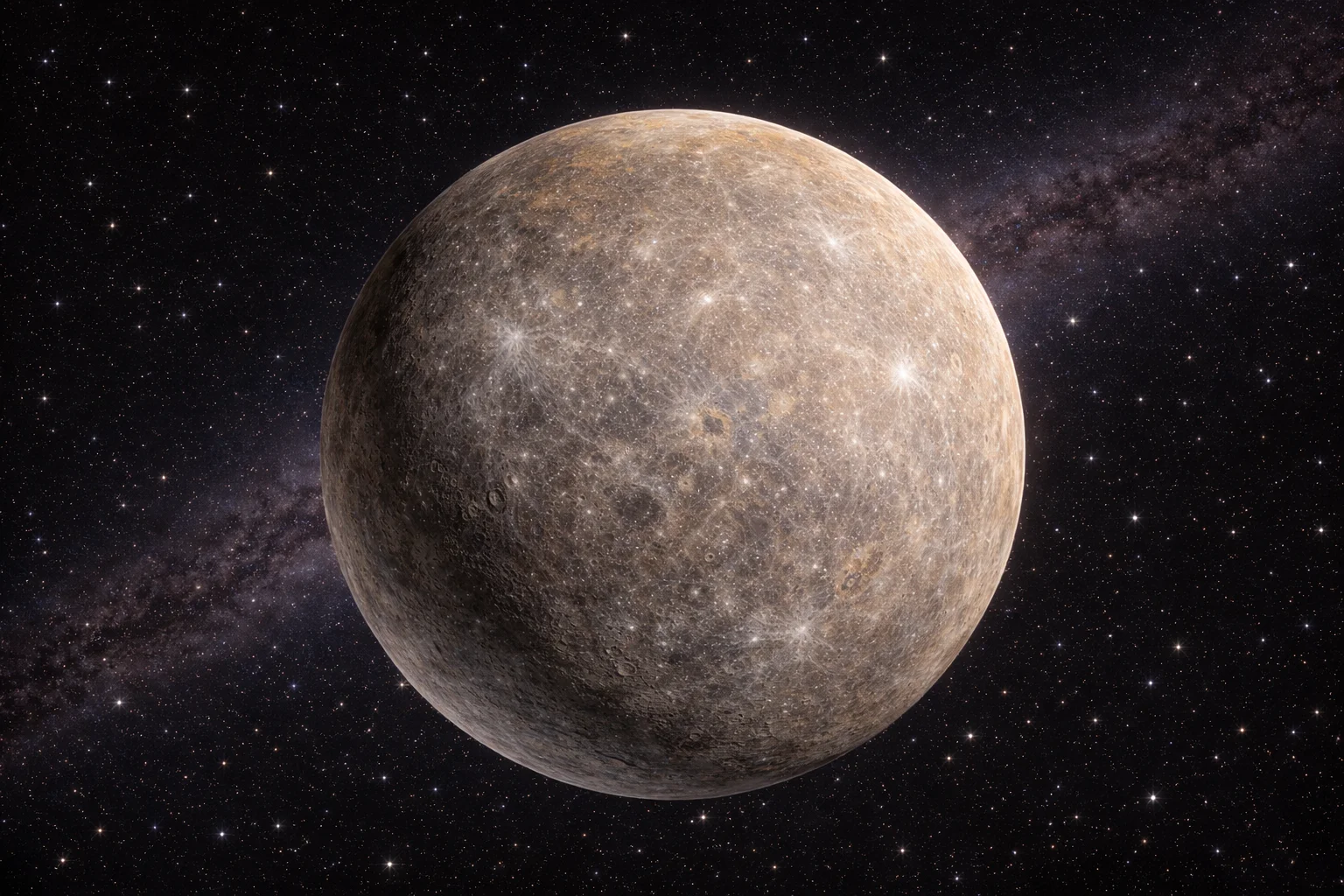
The third step is developing discernment — the capacity to distinguish genuine intuition from wishful thinking, real transcendence from escapist fantasy, healthy surrender from unhealthy boundary loss. This requires other planetary functions, particularly Saturn's reality testing and Mercury's critical thinking. Neptune alone cannot evaluate its own visions; it needs other faculties to ground and test them.
Because Neptune moves so slowly, spending approximately fourteen years in each sign, Neptune sign is generational rather than personal. Everyone born within the same fourteen-year period shares a Neptune sign, giving each generation its characteristic spiritual style, collective fantasies, and blind spots. Neptune in Pisces, the current transit from 2012 to 2026, has brought a resurgence of spiritual seeking, heightened collective imagination, and unfortunately also increased confusion, conspiracy thinking, and escapism through screens and substances. The previous generation, with Neptune in Aquarius from 1998 to 2012, idealized technology and collective connection through the internet — and also experienced disillusionment as those ideals collided with reality.
What makes Neptune personal in your chart is its house placement and aspects. The house shows where you seek transcendence, experience confusion, and need to develop discernment. The aspects show how Neptunian themes integrate with other dimensions of your personality. Neptune conjunct the Sun makes transcendence central to identity; Neptune square Mars creates tension between spiritual ideals and assertive drives; Neptune trine Venus flows easily between love and spiritual connection.
Neptune dissolves the experience of linear time as well as other boundaries. Under strong Neptune influence, time can seem to stand still, stretch infinitely, or collapse entirely. This is another reason Neptune connects to mystical states — mystical experience often includes the sense that past, present, and future are simultaneously present, that ordinary time is an illusion concealing an eternal now. Neptune transits can feel like wandering in fog without landmarks to indicate how much time has passed or how much remains. Projects started under Neptune often take much longer than expected because the usual markers of progress dissolve.
This relationship with time has practical implications. Do not schedule important deadlines during exact Neptune transits to natal planets. Do not expect Neptune periods to have clear beginnings, middles, and ends — they blur into each other. Do accept that some of what Neptune initiates will only become clear in retrospect, sometimes years later. Neptune plants seeds in the unconscious that germinate according to their own mysterious timing.
In medical astrology, Neptune governs the pineal gland, which produces melatonin and has been called the seat of the soul in mystical traditions. It also rules the lymphatic system, which removes toxins from the body, and the feet, the part of the body that connects us to the ground yet is furthest from conscious control. Neptune-related health issues often involve mysterious conditions that resist diagnosis, sensitivities to medications and substances, boundary issues between what the body accepts and rejects, and conditions that improve or worsen according to psychological and spiritual states rather than purely physical causes.
People with strong Neptune are often unusually sensitive to substances, environments, and energies. Small doses of medications affect them strongly; they absorb the moods of people around them; they may need more sleep and dream time than others. This sensitivity is both gift and burden. It enables artistic and intuitive attunement but requires careful management to prevent overwhelm.
Ultimately, Neptune represents the cosmic veil between ordinary consciousness and the infinite. Sometimes the veil thickens — and we see only solid, separate reality with no awareness of anything beyond. Sometimes the veil thins — and we glimpse, however briefly, the interconnected unity that underlies apparent separation. Neptune's promise is that the veil can become so thin as to disappear entirely, revealing direct experience of what mystics call God, the Tao, the Absolute, or simply What Is. Whether this promise is true or is itself a Neptunian illusion, the longing it evokes shapes human life profoundly. We are creatures who yearn for transcendence, and Neptune is the celestial body that carries that yearning.
Neptune rules Pisces, where it expresses with full oceanic power — boundless imagination, deep spirituality, profound compassion, and also maximum confusion, escapism, and boundary dissolution. Neptune in Pisces, currently transiting from 2012 to 2026, produces a generation particularly attuned to collective spirituality and collective delusion, artistic imagination and escapist fantasy, compassionate service and victim consciousness. Neptune is exalted in Leo or Cancer depending on the astrological system — where creative self-expression or emotional nurturing become vehicles for transcendence. Neptune is in detriment in Virgo, opposite its home, where the practical, discriminating, analytical Virgo energy conflicts with Neptune's boundary-dissolving nature — Virgo Neptune must learn to ground transcendence in practical service and careful discernment. Neptune is in fall in Capricorn or Aquarius, where earthly ambition or intellectual detachment resist oceanic dissolution — these placements often produce people who distrust spirituality or struggle to access imagination until life forces surrender upon them. Dignity does not determine destiny: Neptune in Virgo or Capricorn can be powerfully and constructively expressed through disciplined spiritual practice or service-oriented imagination.
Topics: dreams, spirituality, imagination, intuition, illusion, compassion, creativity, transcendence, mysticism, escapism
Imaginative, deeply compassionate, artistically gifted, spiritually attuned, intuitive, inspired, healing presence
Escapist, prone to delusion, addictive tendencies, boundary issues, victim mentality, deceptive, chronically confused
In a birth chart, Neptune shows where you seek transcendence, experience confusion, and access imagination and spiritual perception. Neptune's house placement reveals the life arena where boundaries blur, where you idealize and may deceive yourself, and where you connect to something greater than ordinary reality. Neptune in the 7th house idealizes partners and may attract unavailable or deceptive people until learning discernment; in the 10th house, career lacks clear direction but may involve service, art, or healing; in the 4th house, family origins contain secrets or idealization, and home may be a spiritual sanctuary. Aspects to Neptune modify its expression — Neptune conjunct the Sun dissolves ego boundaries and may produce artists or mystics or people who struggle with identity; Neptune square Mars creates tension between spiritual ideals and aggressive drives; Neptune trine Venus flows easily between love, beauty, and transcendence. Because Neptune's sign is generational, what makes Neptune personal is these house and aspect configurations. Strong Neptune people are intuitive, artistic, compassionate, and spiritually attuned — but must guard against escapism, self-deception, and boundary confusion.
Neptune transits are the longest and most subtle of any planet except Pluto. Neptune takes 165 years to orbit the Sun, spending approximately fourteen years in each sign and two to three years in contact with any natal planet due to retrograde motion. During Neptune transits, expect gradual dissolution rather than dramatic events — the slow erosion of certainty, the blurring of what seemed clear, the idealization or disillusionment that unfolds over years rather than weeks. Neptune conjunct natal Sun initiates a period of identity confusion and spiritual seeking that can last two to three years; old self-concepts dissolve without new ones immediately forming. Neptune square natal Moon destabilizes emotional security and may coincide with maternal issues, housing confusion, or periods of inexplicable sadness. Neptune opposite natal Saturn dissolves structures you depended on, forcing either spiritual growth or depressive collapse. The key to Neptune transits is surrendering control while maintaining discernment — allowing the dissolution that needs to happen while not losing yourself entirely. Neptune transits are often only understood in retrospect; their meaning clarifies years after they complete.
Neptune contacts in synastry create idealization, romance, and potential deception between two people. When your Neptune aspects someone's personal planets, you may embody their fantasy or spiritual ideal — which can feel magical until they discover you are human. When someone's Neptune aspects your planets, they may idealize you or confuse you with their projections. Neptune conjunct Venus is classic romantic idealization — seeing the beloved as perfect, experiencing love as transcendence, but potentially unable to see who the person actually is. Neptune conjunct the Sun can feel like meeting a soulmate, someone who reflects your highest self, but may also dissolve your identity in the relationship. Neptune square Mars creates tension between fantasy and reality in sexual and assertive expression. The gift of Neptune in synastry is genuine spiritual connection, compassion, and the sense that this relationship opens doorways beyond ordinary experience. The danger is deception, disillusionment, and the painful discovery that you loved an illusion rather than a person. Neptune relationships work best when both people are spiritually mature enough to love the actual person alongside their ideal.
| Nov 12, 2026in 54 days | ⚹ | Sextile ♇ Pluto |
| Dec 14, 2026in 86 days | ↻ | Goes Direct in ♈ Aries |
| Jul 8, 2027in 292 days | ℞ | Goes Retrograde in ♈ Aries |
Every morning, we check where the planets are and tell you what it means. Not vague stuff — things you might actually notice today.
Not vague promises about 'growth opportunities.' Real themes. Real timing. What this year is actually about for you — and when it gets interesting.
Your birth chart, distilled into one shareable image. Dating roasts, personality callouts, compatibility scores. €1 each. Built for group chats.
Your cosmic blueprint revealed. See why you are the way you are — your patterns, strengths, and the themes that keep showing up in your life.