Flowing
The sky favors cooperation and flow
69%
harmony
Learn about aspects in astrology: what conjunctions, squares, trines, and oppositions mean, how they affect your birth chart, and why planetary aspects matter.
Last updated:
The sky favors cooperation and flow
Energy is integrating past peaks
Aspects are the geometric relationships between planets in a birth chart. They describe how planetary energies interact — whether they flow together harmoniously, challenge each other with friction, or create tension that demands conscious resolution. Without aspects, a chart would be a collection of isolated energies. Aspects weave those energies into a living system where every planet participates in an ongoing conversation.
Think of your birth chart as a room full of people. The planets are the personalities present. The signs are their temperaments and styles. The houses are the topics they care about. But what makes the room come alive is how these personalities relate to each other. Do they collaborate? Compete? Ignore each other? Aspects answer these questions.
An aspect forms when two planets occupy positions that create a specific angular relationship measured along the ecliptic. The conjunction places planets at the same degree — they speak with one voice. The opposition puts them 180 degrees apart — they face each other across the chart, creating polarity and tension. The square at 90 degrees creates friction that demands action. The trine at 120 degrees flows effortlessly. The sextile at 60 degrees offers opportunity. Each angle carries distinct meaning.
Astrology recognizes numerous angular relationships, from the fundamental major aspects to the subtle minor ones. The conjunction (0°) represents fusion — two energies blending into one expression that is difficult to separate. Whether this is harmonious or challenging depends entirely on which planets meet. Venus conjunct Jupiter radiates generosity and pleasure. Mars conjunct Saturn feels like driving with the brakes on.
The opposition (180°) places planets in signs that face each other across the zodiac wheel. This creates awareness and polarity — you see both sides but struggle to integrate them. Oppositions often manifest through relationships, as we project the opposed planet onto others until we learn to own both energies internally.
The square (90°) is the engine of the chart. Squares create internal friction between energies that want different things. This tension is uncomfortable but productive — it forces action. People with many squares often accomplish significant things precisely because they cannot rest easy. The discomfort drives achievement.
The trine (120°) connects planets in signs of the same element — fire to fire, earth to earth, water to water, air to air. This creates natural flow and talent that comes so easily you might not even notice it. Trines are gifts, but gifts that can be taken for granted. Without friction, you may never fully develop what comes naturally.
The sextile (60°) connects compatible elements and represents opportunity. Unlike the trine, which flows automatically, sextiles require some action to activate. They are doors you must choose to open. A sextile between Venus and Mars offers romantic opportunity — but you still have to show up.
The quincunx (150°) connects signs that share nothing — different element, different modality, different polarity. These energies do not understand each other and require constant adjustment. Quincunxes feel like trying to harmonize two frequencies that simply do not match. They demand flexibility and often relate to health or circumstances that force adaptation.
The semi-sextile (30°) is subtle — neighboring signs that share little common ground but must coexist. It creates mild friction and the need for integration between adjacent life areas. Semi-sextiles often operate in the background, adding texture rather than driving major themes.
Not every aspect is equally strong. An exact aspect — where planets sit at precisely the correct angle — expresses most powerfully. But aspects remain active within a range called the orb. A trine is exact at 120 degrees, but with an 8-degree orb, planets anywhere from 112 to 128 degrees apart still form a trine, though with diminishing intensity as the angle widens.
Different planets receive different orb allowances. The Sun and Moon, as luminaries, are granted wider orbs — their influence radiates broadly. Outer planets like Uranus, Neptune, and Pluto typically receive tighter orbs because their effects are generational unless the aspect is close.
An applying aspect is one that is forming — the faster-moving planet is approaching the exact angle. A separating aspect has passed exactness and is moving away. Applying aspects carry building energy and anticipation; separating aspects feel like integration or aftermath. In transit work, applying aspects are particularly significant because they represent incoming events rather than past ones.
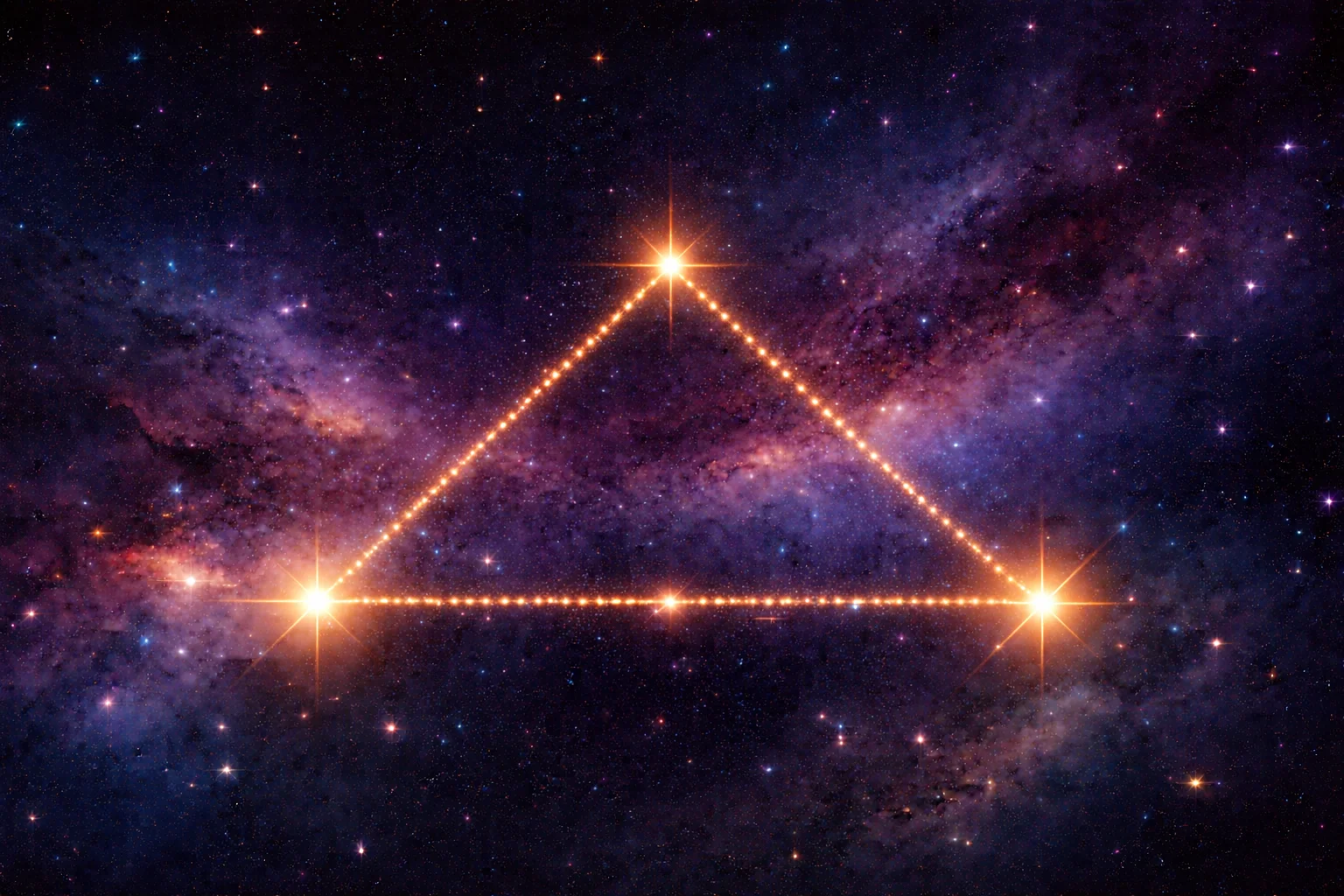
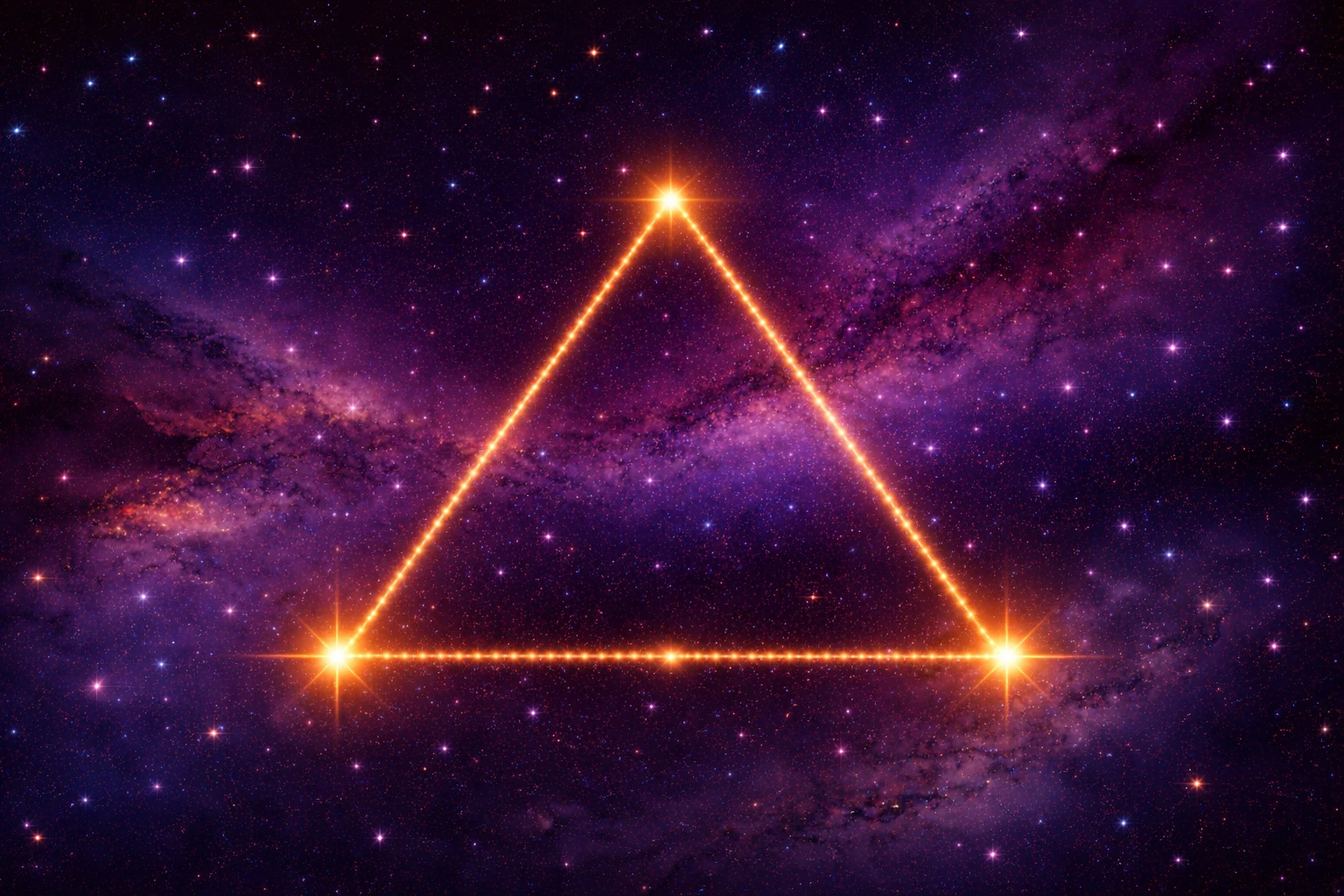
When three or more planets form interlocking aspects, they create patterns that dominate chart interpretation. A Grand Trine forms when three planets each trine the other two, creating a triangle in one element. This represents exceptional natural flow in that element's domain — creativity for fire, stability for earth, emotional depth for water, intellectual agility for air. The challenge is complacency: with so much ease, growth may stall.
A T-Square forms when two planets oppose each other and both square a third (the apex). This creates intense focused tension on the apex planet's sign and house. T-squares drive ambition and achievement but can feel relentless. The empty leg — the point opposite the apex — often represents an area to develop for balance.
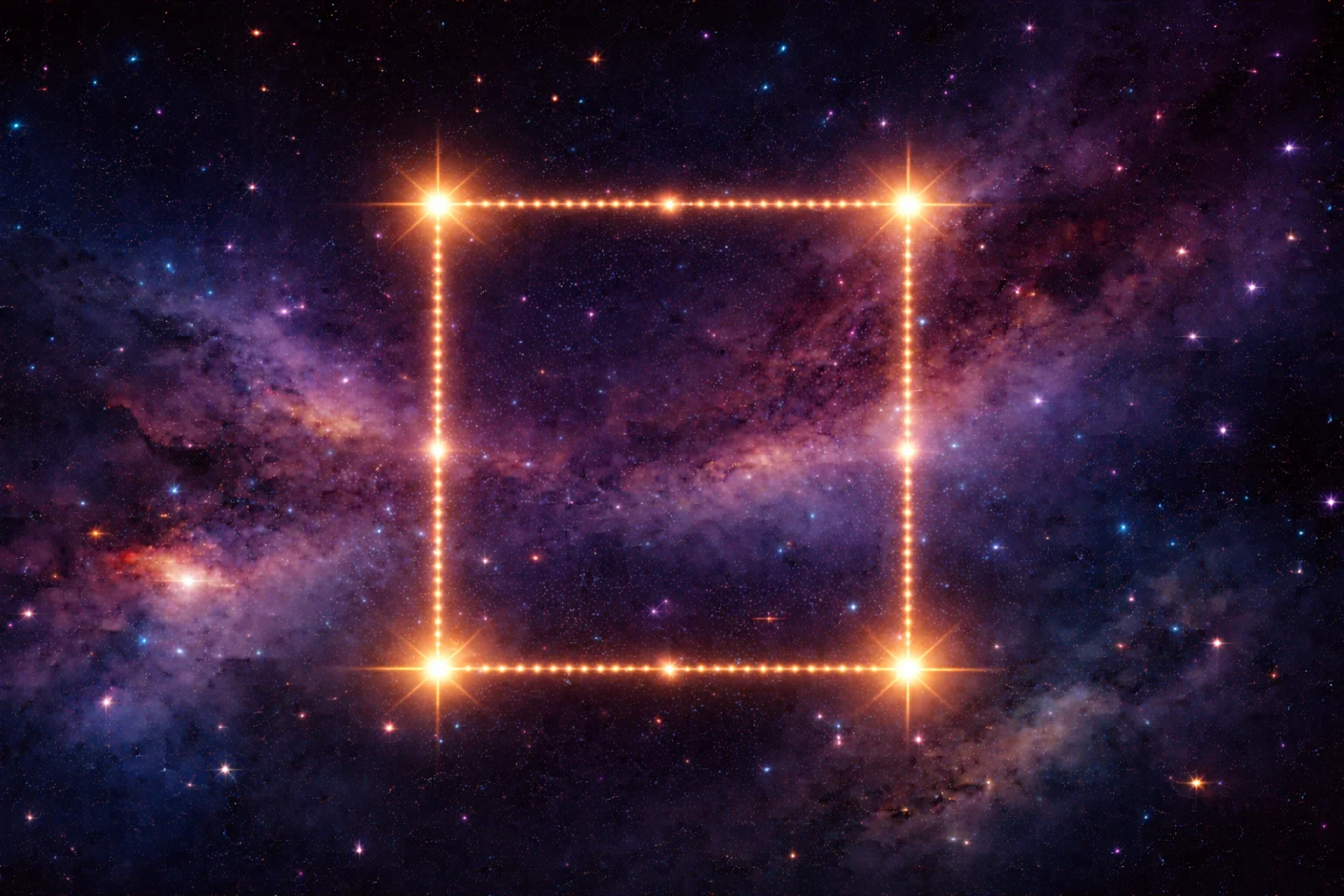
A Grand Cross occurs when four planets form two oppositions that square each other, creating a cross pattern. This is the most challenging configuration, with tension pulling in four directions simultaneously. People with Grand Crosses often feel torn between competing demands but can achieve remarkable integration when they find their center.
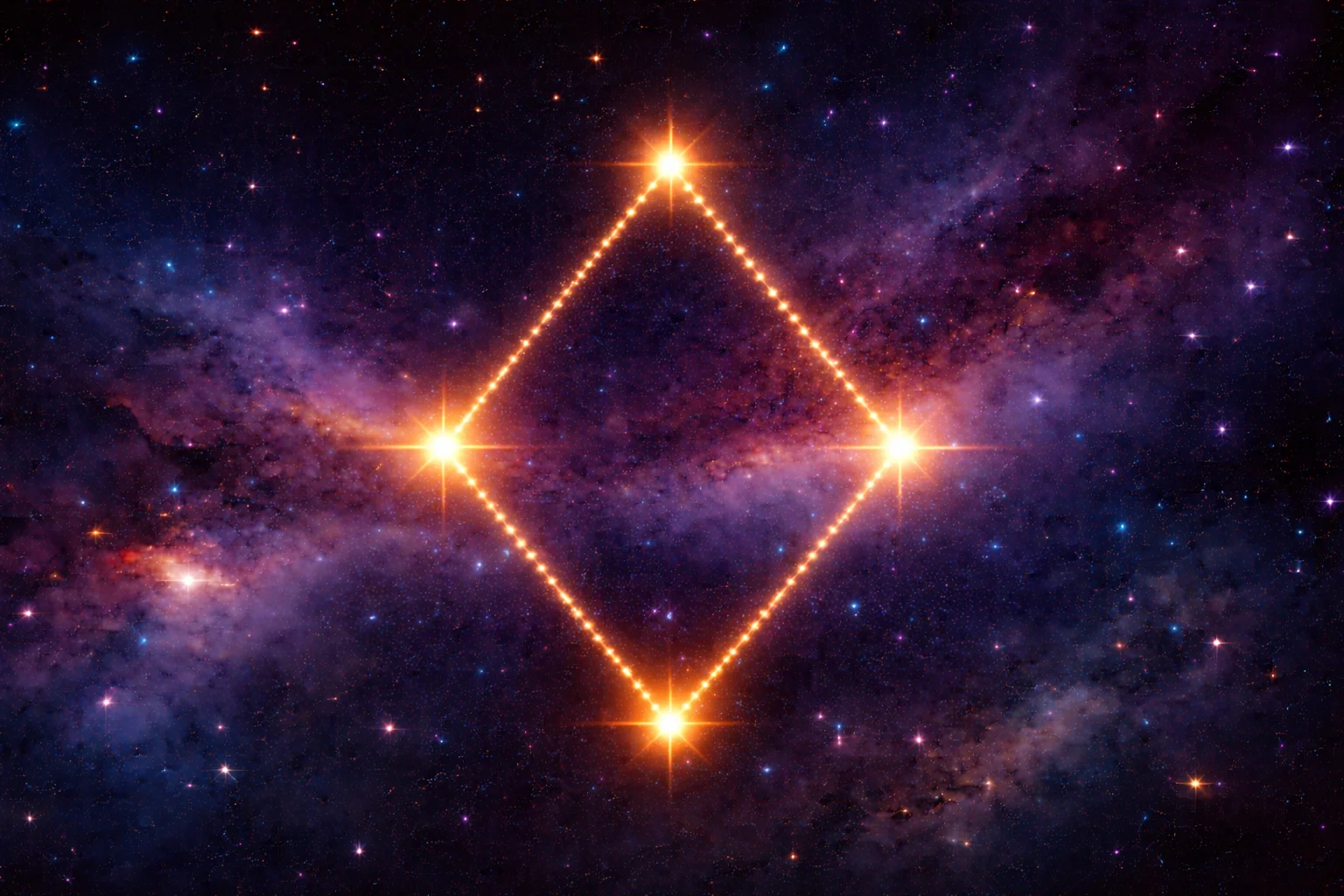
A Yod, called the Finger of God, forms when two planets sextile each other and both quincunx a third. The apex planet carries a sense of fated purpose or special mission that feels impossible to ignore but difficult to fulfill. Yods often correlate with crisis points that redirect life toward unexpected paths.
To understand your aspects, start with the major ones involving personal planets — Sun, Moon, Mercury, Venus, Mars. These shape your daily experience most directly. Note which aspects are exact or near-exact; these will be most prominent. Pay attention to patterns: if one planet participates in many aspects, it becomes a focal point of the chart.
Challenging aspects are not problems to solve but energies to work with consciously. A square between Venus and Saturn might mean difficulty in love, but it also builds the capacity for deep commitment once you learn to balance affection with responsibility. The friction creates strength.
Harmonious aspects are resources to use, not guarantees of success. A beautiful trine between Jupiter and the Moon offers emotional abundance and optimism, but if you never act on opportunities, the gift remains latent. Easy does not mean automatic.
Aspects reveal the internal conversations that shape your life. Some of those conversations are supportive. Some are arguments. Some are negotiations that never quite resolve. Understanding these dynamics gives you conscious choice in how you respond — and that awareness is the true gift of astrological insight.
| Sep 19, 2026tomorrow | ⚖️ | Flowing → Balanced |
| Sep 19, 2026tomorrow | 🔥 | 14 aspects (3.5° avg) |
| Sep 20, 2026in 2 days | 🔥 | 14 aspects (3.6° avg) |
| Sep 21, 2026in 3 days | 🌊 | Balanced → Flowing |
| Sep 21, 2026in 3 days | 🔥 | 17 aspects (3.9° avg) |
| Sep 22, 2026in 4 days | 🔥 | 18 aspects (4.2° avg) |
| Sep 23, 2026in 5 days | 📈 | Releasing → Building |
| Sep 23, 2026in 5 days | 🔥 | 15 aspects (3.6° avg) |
| Sep 24, 2026in 6 days | 🔥 | 15 aspects (3.3° avg) |
| Sep 25, 2026in 7 days | 🔥 | 13 aspects (3.4° avg) |
| Sep 26, 2026in 8 days | 📉 | Building → Releasing |
| Sep 26, 2026in 8 days | 🔥 | 18 aspects (3.1° avg) |
| Sep 27, 2026in 9 days | 📈 | Releasing → Building |
| Sep 27, 2026in 9 days | 🔥 | 17 aspects (3.8° avg) |
| Sep 28, 2026in 10 days | ⚖️ | Flowing → Balanced |
| Sep 28, 2026in 10 days | 📉 | Building → Releasing |
| Sep 29, 2026in 11 days | 📈 | Releasing → Building |
| Sep 30, 2026in 12 days | 📉 | Building → Releasing |
| Oct 1, 2026in 13 days | 📈 | Releasing → Building |
| Oct 2, 2026in 14 days | 📉 | Building → Releasing |
| Oct 4, 2026in 16 days | 📈 | Releasing → Building |
| Oct 5, 2026in 17 days | 📉 | Building → Releasing |
| Oct 9, 2026in 21 days | 🌊 | Balanced → Flowing |
| Oct 11, 2026in 23 days | ⚖️ | Flowing → Balanced |
| Oct 13, 2026in 25 days | 📈 | Releasing → Building |
| Oct 14, 2026in 26 days | 🌊 | Balanced → Flowing |
| Oct 14, 2026in 26 days | 📉 | Building → Releasing |
| Oct 17, 2026in 29 days | ⚖️ | Flowing → Balanced |
| Oct 18, 2026in 30 days | 📈 | Releasing → Building |
| Oct 19, 2026in 31 days | 🌊 | Balanced → Flowing |
| Oct 20, 2026in 32 days | ⚖️ | Flowing → Balanced |
| Oct 23, 2026in 35 days | 🌊 | Balanced → Flowing |
| Oct 24, 2026in 36 days | 📉 | Building → Releasing |
| Oct 25, 2026in 37 days | ⚖️ | Flowing → Balanced |
| Oct 28, 2026in 40 days | 🌊 | Balanced → Flowing |
| Oct 30, 2026in 42 days | ⚖️ | Flowing → Balanced |
| Nov 1, 2026in 44 days | 🌊 | Balanced → Flowing |
| Nov 2, 2026in 45 days | ⚖️ | Flowing → Balanced |
| Nov 2, 2026in 45 days | 📈 | Releasing → Building |
| Nov 3, 2026in 46 days | 🌊 | Balanced → Flowing |
| Nov 17, 2026in 60 days | ⚖️ | Flowing → Balanced |
| Nov 19, 2026in 62 days | 🌊 | Balanced → Flowing |
| Nov 20, 2026in 63 days | 📉 | Building → Releasing |
| Nov 21, 2026in 64 days | ⚖️ | Flowing → Balanced |
| Nov 21, 2026in 64 days | 📈 | Releasing → Building |
| Nov 22, 2026in 65 days | 📉 | Building → Releasing |
| Nov 23, 2026in 66 days | 🌊 | Balanced → Flowing |
| Nov 23, 2026in 66 days | 📈 | Releasing → Building |
| Nov 24, 2026in 67 days | 📉 | Building → Releasing |
| Nov 25, 2026in 68 days | 📈 | Releasing → Building |
Every morning, we check where the planets are and tell you what it means. Not vague stuff — things you might actually notice today.
Not vague promises about 'growth opportunities.' Real themes. Real timing. What this year is actually about for you — and when it gets interesting.
Your birth chart, distilled into one shareable image. Dating roasts, personality callouts, compatibility scores. €1 each. Built for group chats.
Your cosmic blueprint revealed. See why you are the way you are — your patterns, strengths, and the themes that keep showing up in your life.